
Three events trigger this followup on censorship in the United States.
I finished Kate Quinn’s 2026 novel “The Astral Library.”
I read a Substack article decrying the failure of Substack because Substack is not censoring content. The writer announced that they wished to deny ’Stack any revenue. To do so, this writer is ceasing efforts to collect revenue for their posts.
Senator Markey of Massachusetts posted a video on YouTube called “History of the Lowell Mills Industrial Revolution. This video was created by the National Park Service, funded by our tax dollars, and removed by the present federal administration.
Kate’s ASTRAL LIBRARY explores the importance of free and open access to knowledge and libraries. And to charm me, she tosses in a few proper Anglo Saxon words for which I have recently been censored for using (actually, either my words or my characters or my narrative was censored, I wasn’t told). Instead of investing years in researching some amazing historical heroine, Kate let her soul and fury rage. I should not reduce her fine writing to a trite phrase, but I heard her scream “save our libraries and cease efforts to remove books from shelves.” Yay, team. I stand with you Kate (and your librarian mom).
In The ’Stack article referenced as #2 above, I read that this author decided to deny ’Stack funding by not collecting fees. The criticism is that Substack’s is not censoring articles and creative humans on the site. Substack let an objectionable speaker speak, an troubling writer write.
Substack is not censoring despicable content or despicable people or despicable groups. I concur. I see stuff on Substack that offends me. I also see stuff that thrills me. Additionally, I see more Anglo Saxon utterances and rich use of English here than any other platform. I also like seeing cussing in other languages.
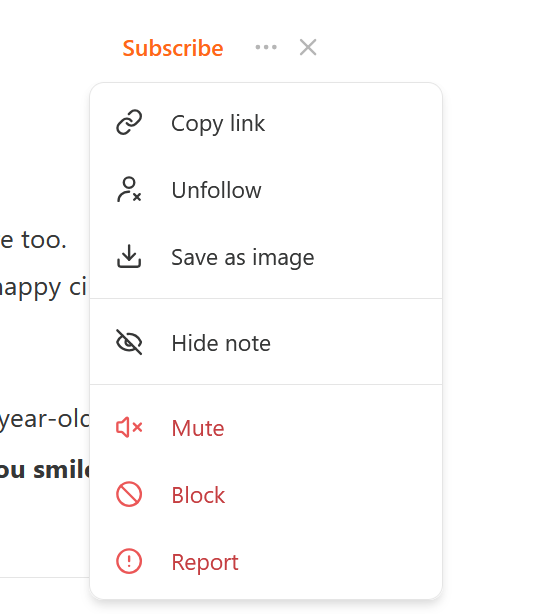
Mute the shit. Simple. Right click on a post, click MUTE. You are NOT censoring. You are deciding what is appropriate for you. I hope that Substack keeps not reporting “muted” back to authors. I’d like to think I don’t care, but I’d struggle to understand why I’d be muted. Then of course, I write with coarse language. I stand behind my queer characters. And oddly, some find the writings of public services and military folks as offense from the git-go. I’d still not like to see the tally of “muted” on my dashboard.
Senator Ed Markey decided to return a censored NPS documentary to the public domain via YouTube. Call this anti-censorship.
To this mix, I should add that I wrote a ’Stack essay a week ago about censorship within American publishers and organizations that host writing contests. That article is: here.
Before proceeding, let me reverse the clock to the period between 1978 and 1982 when I was in high school. I attended a wealthy public school in eastern Massachusetts. WWII ended in 1945 (33 years before my freshman year). During that war and the decades that followed, European refugees found a home in Metro-Boston. My math teacher had been tattooed by the Nazi while she was in a concentration camp. She lived next door to my cousins in a neighboring town. Down the hall from her math class was my history class. That teacher had been raised under Tito in old Yugoslavia. Dinners at my home were a hodgepodge of people, stories of exile, stories of persecution, and stories rich with accents and humor. There was love, and Yiddish and English (and Danish? And Irish). America. We had engineers, artists, astrophysicists, and famous folks at this table. I grew up in a bubbling cauldron. Yay. Yay for me. I can cuss and insult people in at least 5 languages.
Back to history class, my history teacher stood before us one day dressed in a mid-century European costume, opened a book then read aloud loudly with a stage actors skills. He read from one of the most offensive books of the 20th Century. He read it aloud a few meters down the hall from my math teacher. His struggle (a phrase selected intentionally) included reading from this book to a classroom of students was that something like 40% Jewish. Others were children of Italian immigrants, Irish immigrants, and Armenian immigrants, and others were old timey Boston Blue Bloods.
Given I was a student, I could not know what discussions took place within the school’s management team. I doubt that my teacher did this performance without presenting a plan and presenting the benefits in advance. Imagine a day in 1979 or 1980 meeting with fellow teachers and school leaders suggesting that a full-throated reading from this book was a necessary part of our education. In 2026, I remember this lecture and experience. It informs my life today.
Why would a young teacher whose family fled Yugoslavia (WWII, Communists, Cold War) read from that book? Was he advocating these views? Was he teaching us to listen critically? Was part of the lesson a reminder that these events in our shared history happened and my job as a future adult is to see the risks and help my nation avoid these abhorrent views?
I would prefer this book be available at the library. All libraries. This book changed a continent and resulted in the massacre of 12+ million human being for human. I won’t read it. I likely wouldn’t touch it due to some fear of transference. That book stands as a foundation stone in every human slaughterhouse and detention camp since the late 1930s (including the modern USA). We can’t talk about the history of the holocaust without also discussing the ideas and writings of the architects. To deny the existence of one side of this equation weakens our comprehension of the aftermath. They exist together. Deny one side: we risk denying the other side. Cut the causes of the holocaust from bookshelves then we can start denying the rest of the story. Some may wish to see parallels with our efforts to revise America’s history with slavery and some contemporary writers denying the evils of enslaving humans. This book exists, therefore the holocaust exists.
I am seeing articles in the New York Times that PEN America is using its visibility to support specific political/cultural issues; issues that not all agree with. It occasionally seems some publishing (publishing-adjacent) organizations are using their might to promote political and cultural views as a body that represents us (American writers?). In corporate mission statements, some of these organizations state that they wish to address historic harms; give voice to the unheard. The intent of PEN International, a sister organization, was to foster international literary fellowship among writers that would transcend national and ethnic divides in the wake of World War I. During the decades since my time in Iraq to this day, PEN America can’t find a balance point between promoting certain political view and promoting freedom of expression. Someone at PEN America decided to put the finger (the weight of their members) in support of X and refutation of Y. They did it while I was in Iraq and they did it this recent year too. You never really know what will happen when you touch the balance that Lady Justice holds.
Censorship fails to fit neatly into boxes and Venn Diagrams. “To foster international literary fellowship among writers that would transcend national and ethnic divides” means not segmenting humans based on national and ethnic divides. The precise opposite of the temptation of so many thinkers of this decade. The answer to divisiveness is not more divisiveness. We likely ought not acknowledge and amplify the fracture points. Let artists tell stories with a deliberate blindness. Find truth where it exists, not where you believe it ought to exist.
If we deny access to troubling writing/troubling artists, then we are censoring. If we scream that this (or that) group is be given a voice, must we also diminish the voices of others? Is it that we must suppress the voice of the opposition? The oppressor, the aggressor? Both exist. Picasso was Spanish living in Paris. He painted Guernica which is his telling of a German Nazis bombing a Basque village in 1937. Do we herald this piece even though it was painted by a non-Basque Spaniard? It has been called an inconvenient masterpiece. (footnote 1) It really isn’t. It is art, painted by a human artist who expressed sympathy and horror.
I do not own a copy of that book my history teacher read from. I will not own a copy. I’d be horrified if someone saw it in my living room while serving lamb during Seder which is oft celebrated in this house. I love Seder. I love being reminded of our separated but shared stories of exodus. My father’s family’s exile from the Scottish Highlands. My mother’s mother’s stories of exile from Ireland during the famine and land theft by others. Lost of uncles, aunts, parents, grandparents of our friends to the camps. I love and hate the stories of our friends whose family walked the Trail of Tears. My surrogate’s grandfather’s stories of being a young Brooklyn Jewish kid time as a tail gunner bombing Germany.
I appreciate Substack for not censoring. I love seeing the work “FUCK” writ large on some graphics. Yay.
I do NOT like all of the content I see. I am not easily offended, but there is some nonsense I just don’t want to hear, don’t want to see.
Guess what, ’Stack has a mute button. I mute folks. I’ll not confess to you what I mute.
I can not simultaneously celebrate the First Amendment to the U.S. Constitution while stating that if I see/read/hear some nonsense I don’t approve of that the platform is at fault. No. Instead of yelling: “Shut the fuck up,” I whisper. I click the little button that says: “Not for me now or ever, go away.” Mute.
No, I am not going to punish a publisher who respects free speech. I am not going to ask a publisher/platform to respect my speech while demanding that they attenuate the speech of others.
For social networks, as ’Stack is, we are not protected by the U.S. Constitution. There are corporate overlords who seems to twiddle and diddle with speech. Tiktok is all but owned by Larry Ellison of Oracle and Paramount and Skydance and whatever else he and his son buy this week. Insta/Facebook run within the domain and rules of Zuckerberg. YouTube & Google, a corporate giant, faces frequent complaints of censorship and regulating flow to certain content.
As Senator Markey illustrated, the U.S. Government actively de-censored publicly-funded content.
This particular American once raised a hand and swore to defend the Constitution. Guess what, that means accepting free speech. Accepting free speech is difficult. One of the worst things about free speech is that it must flow to and fro. For me to ask that you accept my right to say my words, I must accept your right to say your words. I may hate your views, or your words. That said, I must defend your right to your shitty, horrible, objectionable opinions. I’ll defend it then mute your nonsense because I can. This same freedom of speech means I am free to not listen, and not read. I got me a mute button.
Substack isn’t failing due to a lack of censorship, it is succeeding because it does not censor. As a reader, I use the mute feature the platform provides each of us. I shall defend your right to say what ever nonsense you want. I can chose to not listen. I can chose to not read. It goes both ways. Either you may complain about the blisters erupting your palm or move your fucking hand off the flame. You pick (not me).
Footnotes
Escalona, Alejandro. 75 years of Picasso’s Guernica: An Inconvenient Masterpiece, The Huffington Post, 23 May 2012.
Author
I.M. Aiken (https://IamAiken.org/)
Author, essayist, & narrator
“Stolen Mountain” (2025)
“Trowbridge Dispatch” - fictional short stories/podcast on Substack
While this ’Stack feed is free, my short stories do ask for financial support and thus I do help fund Substack.
Engage! (comments are public, messages are less so)